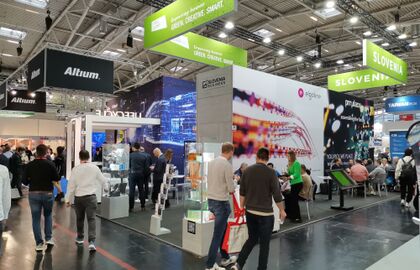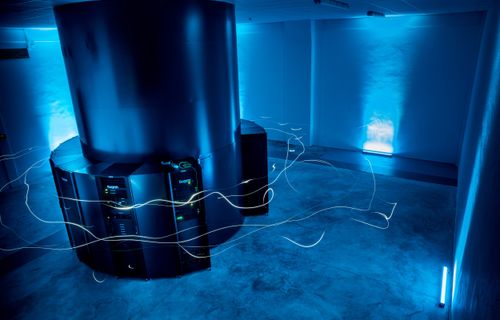


To paraphrase a quote from the movie Forrest Gump, "Smart is who smart does". Slovenia has been actively developing and implementing smart technologies that connect objects to the internet and save resources, money, and worry. Local tech companies provide both hardware and software solutions, such as IoT platforms, measurement devices, and mechatronics. Furthermore, start-ups specialize in blockchain technology, and Slovenian researchers were early pioneers in the development of AI. Traditional manufacturers, like those of home appliances, windows, doors, and prefabricated homes, have also been incorporating smart solutions into their products. The entire society is becoming smarter; many local communities are running pilot projects, and the power and water networks are being upgraded with advanced measurement solutions. The Slovenian economy is the sixth best in Europe for AI integration and scores higher than the EU average in digital intensity. The fact that many of these solutions use locally developed components or systems is a distinct advantage.


Slovenia is one of the top twenty countries in the world for robot density in manufacturing*, a clear sign that the country's economy is following the Industry 4.0 model. Many of the components of this smart industry have been developed within Slovenia, and several Japanese robot manufacturers have chosen the country as their European production and research base. Local SMEs have not been left behind, offering flexible robot cells of their own design. Slovenian tech companies provide components like motion sensors, and complete manufacturing systems, from planning and scheduling to execution systems that include process control, in-line quality control with X-ray scanning, metrology solutions, IoT platforms, and machine learning systems. An emphasis is placed on both a high level of flexibility and superior precision; this is not only important for the economy of Slovenia, which is mainly made up of small, specialized SMEs, but is also a key requirement for modern industry in general.
Slovenia's telecommunication equipment and measurement device industry provides an ideal foundation for the development of smart city solutions. The nation's SMEs offer a vast array of infrastructural components for such projects, including parking sensors, LED public displays, garbage container capacity sensors, and integrated IoT solutions for various areas, including smart healthcare. The Japanese-Slovenian partnership smart power grid project NEDO uses equipment and systems developed by both Japanese and Slovenian companies. The project highlights another benefit of Slovenia; its size and well-developed infrastructure make it an optimal testing ground for new technologies and solutions. One of the dynamic local start-ups specializes in testing future forms of sustainable mobility, using Ljubljana's commercial centre, BTC, as a large city lab for solutions such as autonomous driving.
The World's first completely smart entrance wall with face recognition, one of the first smart heat pumps, and the smallest Z-Wave microcontrollers - all these elements have been developed by Slovenian tech companies. For some time, the idea of integrating the Internet into everyday products has been adopted by local home appliance producers, heating and ventilation system makers, manufacturers of building elements, and prefabricated house producers. Slovenian companies develop the hardware elements for smart homes and cloud-based integrative solutions. A promising start-up is focusing on smart home solutions for the elderly and people with various disabilities - an area where new technology could drastically improve the quality of life.
The new technologies could bring services typically only available in urban areas to rural populations, significantly improving their quality of life. Several smart village pilot projects are already underway in Slovenia. An example is the energy-self-sufficient village of Luče, which uses an IoT platform developed by a Slovenian energy company. Local companies are also developing remote health care solutions - an essential element for so-called silver villages, a package of smart solutions offering home care for the elderly. Agriculture, a key economic activity in rural areas, could also be vastly improved by using smart technologies. A Slovenian company developed an award-winning IT system for agricultural production, including IoT applications and web services data delivery. Another SME offers solutions for precision fertilization based on drone-driven multispectral images. Slovenian tech companies also offer advanced GIS-based solutions, automated pest monitoring systems, and food safety and tracking solutions. Finally, a local start-up has developed an agricultural robot for vineyards and orchards. This sustainable technology reduces emissions, the use of chemical agents, and human labour - all to improve the quality of life in rural areas.