

As the European auto industry faces a historic downturn, Slovenia's agile suppliers are bypassing traditional limits through EV innovation and global diversification.
The automotive sector is Slovenia’s premier exporting powerhouse. The industry directly contributes roughly 10 percent of Slovenia’s GDP and a whopping 25 percent of its national exports. When factoring in the broader supply network—including tooling, robotics, measurement devices, composite materials, specialized coatings, software, and AI developers—its indirect contribution climbs to 17 percent of the GDP. According to recent figures, the 112 members of the Automotive Cluster of Slovenia (ACS) employ over 36,000 people, generating around 8 billion euros in revenue across 400 active companies in the sector. However, vulnerability remains concentrated: approximately 40 percent of cluster revenues are tied directly to the German market.
When a giant like Volkswagen faces a downturn, the shockwaves hit more than just a handful of suppliers—they reverberate across the entire national economy. Fortunately, the Slovenian automotive ecosystem possesses distinct competitive advantages. Because most companies are small to medium-sized, they remain highly flexible. This agility is paired with engineering talent and a deeply rooted culture of innovation. Furthermore, local manufacturers boast a long-standing tradition in the electric vehicle (EV) market; domestic producers of electric motors, components, and EV systems are already among the largest players in the country.
These core strengths form the backbone of the ACS 2030 Action Plan. The strategy prioritizes aggressive R&D, expansion into uncharted markets, and the development of specialized industrial ecosystems. Moving beyond traditional passenger cars, cluster representatives now frame their vision around "broader mobility," expanding into machinery, aerospace, dual-use products, autonomous vehicles, and Mobility-as-a-Service (MaaS). This focus on innovation is clear: cluster members routinely take home about 25 percent of Slovenia's national innovation awards. While established players like Hidria consistently win international design and innovation prizes, boutique engineering firms are also making waves. Elaphe, for instance, has emerged as a global tech leader in in-wheel electric motor development. To sustain this technological edge, Slovenia launched the GREMO (GREen Mobility) mission—a strategic initiative uniting private enterprises, research institutions, and government backing. In a short time, GREMO has already fostered over 150 innovative solutions in the i-motion and e-motion spaces.
Historically, over-reliance on the German market has been viewed as a structural threat, but diversification is underway. Looking back to 2024, reporting highlighted that the Slovenian auto industry was actively seeking closer ties with China to accelerate its green transition. Industry leaders like Hidria, electric motor manufacturer Domel, and Elaphe have all established manufacturing footprints in China. This bridge-building was further solidified by Slovenian entrepreneur Blaž Štefe, who founded the Euro Sino Automotive Association (ESAA), counting China's fifth-largest automaker, GAC Group, as a strategic partner. Other global markets are also being tapped: Akrapovič has long maintained a strong premium presence in Japan for high-end exhaust systems, while Kolektor manufactures critical electric motor commutators at its Kolektor Sinyung plant in South Korea.
The pivot toward EVs and broader mobility solutions is visible on the factory floor. Renault’s Revoz plant in Novo mesto officially phased out traditional internal combustion engine production to switch exclusively to EVs, led by the new Renault Twingo E-Tech Electric. Today, more than half of Slovenia's largest automotive companies focus heavily on EV or hybrid platforms. Meanwhile, certain subsectors have bypassed the wider automotive crisis altogether. Slovenia is a major hub for recreational vehicles, anchored by three key manufacturers: Adria Mobil, Germany's Carthago, and the premium niche developer Robeta. Their strong performance proves that diversifying beyond standard car components offers a powerful economic buffer.
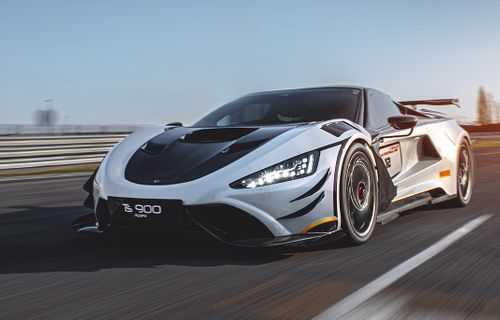
While the majority of Slovenia’s automotive firms operate as Tier-1 or Tier-2 suppliers to major European conglomerates, the country does possess a unique crown jewel in vehicle manufacturing. Beyond a small circle of global automotive aficionados, few have heard of Tushek Cars. Founded by former racing driver Aljoša Tušek, these custom-built supercars are made to order and command multi-million-euro price tags. Tushek's engineering feats include building some of the world's lightest hybrid supercars by leveraging aviation-grade technology. One of their proprietary electric drivetrains weighs a mere 40 kilograms yet unleashes an astonishing 653 horsepower. Their latest hybrid model, the Aeon, is engineered to produce over 2,500 horsepower. While the Tushek workshop is boutique and far from a typical assembly line, it stands as a brilliant showcase of the national industry's technical prowess, creativity, and fearless ambition.