

Slovenian SMEs are among the e-mobility pioneers in air, land, and sea. Their role is achieving increasing recognition on a global level.
The American Institute of Aeronautics & Astronautics’ (AIAA) Aircraft Design Award is arguably the most prestigious recognition in aviation, a kind of Oscar for plane constructors. Among the planes that have received the award are such popular products as the Boeing 787 and Airbus A380 – and as of this summer Velis Electric, a small aircraft made by Slovenian airplane maker Pipistrel, is among them. A few weeks before Velis received the 2021 Aviation Week Laureate Award, the jury stressed that “Slovenia’s Pipistrel redefined general aviation by becoming the first company to certify an electrically powered aircraft—cutting emissions, noise, and operating costs along the way”.
There could hardly be greater recognition of the revolutionary that the developer of ultralight planes from Ajdovščina in western Slovenia is playing. Pipistrel has been working on fully electric and hybrid planes for virtually decades. 10 years ago, the company received NASA’s tech award for the world’s first electric 4-seat aircraft. Another world’s first for Pipistrel came in 2020 when the company got the official certification from the European Union Aviation Safety Agency (EASA) for its electric plane. This year the EASA approved Skycharge, Pipistrel’s electric plane charger. Another first, the first OEM independent charger to gain certification from the EASA.
Pipistrel is one of the most iconic Slovenian tech companies. Yet it is not the only company coming from a 2-million nation that’s playing a pioneering role in the development of sophisticated e-mobility solutions. This years’ World Intellectual Property Organization (WIPO) Enterprise Award went to Slovenian company GEM. The company founded in 2010 is one of the pioneers in developing in-wheel electric drives for various applications, from simple scooters to cars. The German ElectricBrands company, for example, uses GEM’s motors in their innovative modular light vehicle XBUS. Elaphe has been developing in-wheel motors with complete powertrain electronics since the late eighties. Recently, the company partnered with Domel. Domel is a global leader in electromotors for vacuum cleaners. The company has since expanded into the area of e-bike motors and is, in cooperation with Elaphne, developing an innovative electric kick scooter. Domel also partnered with Podkrižnik, the EMSISO R&D company, and Ljubljana’s Faculty of Mechanical Engineering, and has developed one of the most powerful drives for e-bikes on market.
Many Slovenian tech companies excel in developing and manufacturing components for electric and hybrid cars. Their position is particularly strong in electromotors and their components, like magnets, commutators, or laminations. These companies include relatively large entities like Hidria, Kolektor, and Mahle, a Slovenian part of the large German group manufacturing e-mobility components. Again, some of the most unique products come from SMEs. Emrax, for example, develops innovative axial flux electromotors for application in cars, boats, and planes. Mechatronic component producer Podkrižnik specializes in intelligent drive systems and in electric propulsion motors for boats.
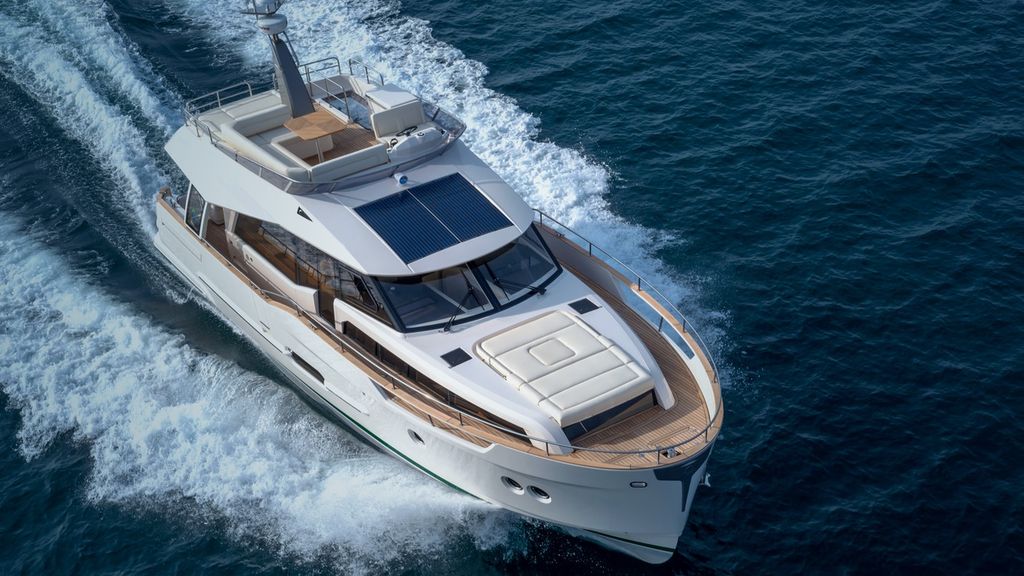
Their electric propulsion drive is used by Quadrofoil, a unique personal hydrofoil. Quadrofoil is an example of original ideas developed by Slovenian boat makers: another area where SMEs from the Alpine republic play a decidedly pioneering role. Slovenian yacht designer Greenline
has been focusing on hybrid and electric yachts since 2009 and has one of the world’s largest fleets of e-driven boats. The Alfastreet Marine range by Sežana’s based boatmaker Počkaj also includes a few electric and hybrid boats. The small company Hovercraft produces unique solar-powered electric hovercrafts. No matter which element, sea, land, or air: when it comes to e-mobility tech companies, the nation of only 2-million people seems to play a pioneering role.